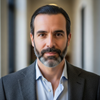
Lleida will host a conference on the military occupation of Catalonia during the Spanish Civil War's final phase, presented by historian Josep Maria Solé i Sabaté on 12 May 2026. The event, part of the Debats de Memòria (Memory Debates) series, will start at 7pm in Sala Jaume Magre, located at Carrer del Bisbe Torres, 2.
Solé i Sabaté will detail the advance of Francoist troops following the Aragon front's collapse in March 1938, leading to Catalonia's fall in February 1939. The session will look at both military aspects and the social and human impact of the occupation. This includes the bombing of civilians, infrastructure destruction, the dismantling of republican institutions, and the 'Retirada' a mass exodus of hundreds of thousands fleeing to France.
Analysing Repression and Collective Memory
The conference will also cover the immediate establishment of Franco's repressive apparatus in occupied territory. It will reflect on how this period has shaped the country's collective memory. The aim is to offer a thorough, yet accessible, view of a defining episode in Catalonia's contemporary history.
Josep Maria Solé i Sabaté, born in Lleida in 1950, is a well-known historian specialising in the Spanish Civil War and Francoism. He holds a doctorate in History from the University of Barcelona and is a professor of Contemporary History at the Autonomous University of Barcelona. He was the first director of the Museum of Catalan History from 1996 to 2000.
Key Contributions to Historical Preservation
Solé i Sabaté has participated in important projects for documentary and heritage recovery, such as the retrieval of Catalan documentation in exile between 1985 and 1991. He also served as general coordinator of the Consorci Memorial dels Espais de la Batalla de l'Ebre (Memorial Consortium of the Ebro Battle Sites) and director of the Institut d'Estudis Ilerdencs (Institute of Lleida Studies).
He has authored many books and studies on the war, repression, exile, and Catalan political history. He also directed reference works such as the Història de la Generalitat de Catalunya i els seus presidents (History of the Government of Catalonia and its Presidents). His career includes extensive public outreach through radio and television, particularly on Catalunya Ràdio. He currently combines research with teaching and regularly participates in conferences and public engagement events across Catalonia.